
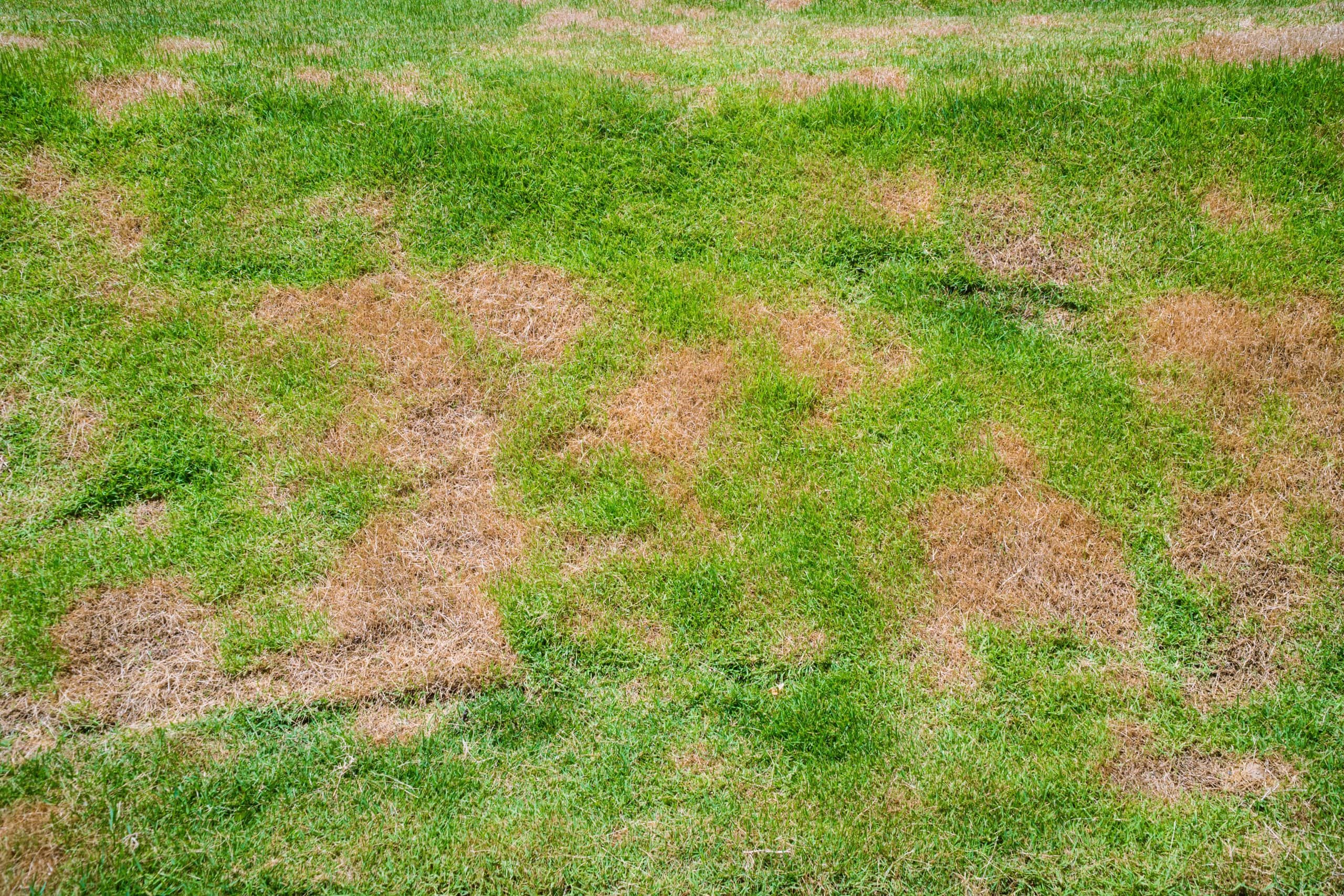
If you’ve noticed circular brown or tan patches spreading across your lawn during hot, humid weather, you’re likely dealing with brown patch disease. This fungal problem affects thousands of Indiana lawns every summer, and understanding what causes it, how to spot it early, and how to treat it can save your grass before the damage spreads.
What Is Brown Patch Disease?
Brown patch is caused by the fungus Rhizoctonia solani, a pathogen that lives in soil and thatch year-round. It stays dormant during cooler months and becomes active when conditions favor rapid fungal growth. In Indiana, this typically means late June through August, when daytime temperatures climb above 85°F and nighttime temperatures stay above 65°F, especially when combined with high humidity or extended leaf wetness.
Cool-season grasses common in Indiana lawns, including tall fescue, Kentucky bluegrass, and perennial ryegrass, are all susceptible. Tall fescue tends to show the most dramatic damage, since individual leaf blades can develop distinct lesions, while Kentucky bluegrass more often shows overall patch collapse without as much visible leaf detail.
How to Identify Brown Patch
Patch shape and size. Look for roughly circular or irregular patches ranging from a few inches to several feet in diameter. Patches can merge into large, irregular dead zones as the disease spreads.
The smoke ring. One of the most reliable identifying features is a dark, grayish-brown border, often called a “smoke ring,” visible around the outer edge of active patches in the early morning while dew is still present. This ring fades as the day warms up, so timing your inspection matters.
Leaf lesions. On tall fescue, examine individual blades for tan lesions with a dark brown or purplish border, sometimes described as looking like a water stain.
Center recovery. Established patches sometimes show a “frog-eye” pattern, where the center recovers and greens up while the outer ring stays damaged. This is more common in bermudagrass but can occur in tall fescue lawns too.
What it’s not. Brown patch is often confused with dollar spot (much smaller, silver-dollar-sized patches) or drought stress (irregular patterns following slope or sun exposure rather than distinct circles). If patches appear during a dry spell with no humidity, drought stress is the more likely culprit.
Conditions That Favor Brown Patch
Several factors combine to create an environment where the fungus thrives:
- Extended leaf wetness. Anything that keeps grass blades wet for more than 10-12 hours, including evening watering, poor drainage, or heavy dew combined with shade, gives the fungus time to infect.
- Excess nitrogen. Heavy spring nitrogen applications produce lush, tender growth that’s more vulnerable to infection during summer heat.
- Poor air circulation. Dense shrubs, fences, or overgrown turf that trap humidity around the grass canopy increase risk.
- Compacted soil or thick thatch. Both restrict drainage and hold moisture at the soil surface longer than they should.
- Mowing too low or with dull blades. Scalped or torn grass blades create entry points for infection and add stress during vulnerable periods.
Prevention Strategies
Water in the early morning. Watering between 4 a.m. and 8 a.m. allows grass to dry quickly as the sun rises. Evening watering is one of the most common triggers for outbreaks, since it leaves the canopy wet all night.
Water deeply, not frequently. Apply about 1 to 1.5 inches per week in one or two sessions rather than light daily watering. Frequent shallow watering keeps the surface consistently damp, which favors fungal growth.
Manage nitrogen carefully. Avoid heavy nitrogen applications in late spring and early summer. If your lawn needs feeding during this window, use a slow-release formula at a reduced rate rather than a quick-release product.
Improve air flow. Prune back shrubs and trees that shade or crowd turf areas, particularly in low spots where moisture tends to collect.
Dethatch and aerate. Core aeration in spring or fall relieves compaction and improves drainage, while removing excess thatch reduces the fungus’s ability to survive between seasons.
Mow correctly. Keep tall fescue at 3 to 3.5 inches and Kentucky bluegrass at 2.5 to 3.5 inches, and make sure mower blades stay sharp. Clean, even cuts heal faster and resist infection better than ragged ones.
Treatment Once Brown Patch Appears
Cultural adjustments first. At the first sign of active disease, stop evening watering immediately and reduce nitrogen input until the outbreak subsides. These two changes alone often slow the spread significantly.
Fungicide options. For active or recurring outbreaks, fungicides containing azoxystrobin, propiconazole, or chlorothalonil are effective against Rhizoctonia. Preventive applications in early summer work best in lawns with a history of repeat outbreaks; curative applications during an active outbreak can still limit spread but won’t reverse existing damage to already-collapsed turf.
Reseeding damaged areas. Once the disease cycle has passed, typically once nighttime temperatures drop below 65°F consistently, overseed damaged patches in early fall. This is the best window for cool-season grass establishment in Indiana and allows the lawn to fully recover before next summer’s heat returns.
When to call a professional. If brown patch recurs year after year despite cultural changes, or if patches cover a significant portion of the lawn, a professional lawn care service can diagnose contributing factors specific to your property, such as drainage issues, soil compaction, or irrigation system timing, and build a treatment plan matched to your grass type and site conditions.
The Bottom Line
Brown patch is manageable with the right combination of watering habits, nitrogen timing, and mowing practices. Catching it early, adjusting your irrigation schedule, and knowing when a fungicide application makes sense can keep your lawn healthy through even the most humid Indiana summers.
Have questions about brown patch or another lawn issue you’re seeing right now? Reach out to Lawn Masters for a property assessment and a treatment plan built around your lawn’s specific conditions.